Brazil has rapidly evolved into the most dynamic solar market in Latin America, transforming into one of the world’s leading PV growth regions. The country ranked number 4 of the worlds biggest solar markets in 2024, adding 18.9 gigawatts (GW) in only one year according to Solar PowerEurope. Its market study “Global Market Outlook for Solar Power” states the country reached around 53 GWAC of cumulative installed PV capacity in 2024.
This rapid expansion continues: The Brazilian national solar association ABSOLAR reported that Brazil surpassed 60 GW by mid-2025. Brazil´s federal energy planning agency EPE published graphs showing that PV already covered 9.3 percent of total electricity demand in 2024. With abundant solar resources, rising electricity demand a stable regulatory framework and a growing domestic solar industry, solar power has become a central pillar of Brazil’s clean energy mix.
The Brazilian solar market is divided into two areas: large-scale utility developments and the highly dynamic distributed generation (DG) sector. Utility-scale solar continues to grow in the Northeast and Southeast, where high irradiation levels and favorable land availability support multi-hundred-megawatt projects.
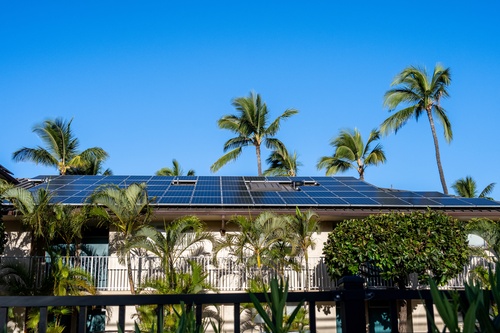
At the same time, distributed generation has become a defining feature of Brazil’s PV sector. Millions of small and medium-sized systems have been deployed since the introduction of Brazil’s net-metering framework in 2012, which established clear long-term compensation rules for prosumers. According to the Global Market Outlook for Solar Power, Brazil installed 9.5 GWAC of distributed generation in 2024 alone.
Despite gradual adjustments to the GD compensation mechanism, market demand remains robust, supported by high retail electricity tariffs and attractive payback periods – including for the commercial and industrial (C&I) sector. According to the electricity planning authority ANEEL, 1 GW of capacity was installed in the C&I sector in the first half of 2025 alone. The C&I sector is expected to receive a significant boost from hybridization with batteries as costs continue to fall.
Brazil’s potential is based on excellent solar resources and a market that has already achieved significant scale. ABSOLAR reports more than aprox. 40 billion US dollars in cumulative investments and over 1.38 million jobs created across the PV value chain, reflecting a maturing developer, EPC, and service ecosystem. The distributed generation framework provides a second growth engine that can scale PV across households, SMEs, agriculture, and corporate consumers. In addition, institutional financing channels exist that can support capital-intensive renewables.
However, challenges remain. While global PV costs have fallen sharply over the last decade, Brazil introduced a countervailing factor in 2024/25 by raising the import duty on PV modules from 9.6% to 25%, with a tariff-quota transition affecting the pace of impact into 2025. Grid connection queues and transmission bottlenecks increasingly constrain both utility-scale and larger GD projects, especially where renewable growth has outpaced network expansion. Financing also remains a key concern: high interest rates and currency volatility raise the cost of capital, particularly for foreign investors. Finally, regulatory complexity across states and municipalities adds uncertainty for project development.
Even though distributed generation remains the driving horse of Brazil´s solar growth, large-scale solar is gaining momentum, the segment increased by 38% in 2024. Green hydrogen is another potential driver of multi-gigawatt PV pipelines. Floating PV pilots on hydropower reservoirs in Minas Gerais and São Paulo signal diversification, while off-grid solar, often combined with batteries—supports sustainable electrification in isolated regions.
Atlas Renewable Energy is building the Complexo Solar Draco in Minas Gerais state, consisting of 11 PV power plants with a capacity of 505 MWAC with a total investment sum of approximately 185 million US dollars.
Newave Energia e Gerdau joint forces to build Parque Solar Barro Alto in Goiás state with a planned capacity of 452 MWp, totaling investment of approximately 250 million US dollars.
In Pernambuco state, 170 MW-plant Complexo Fotovoltaico Sol do Agreste is under construction. Developed by Atiaia Renováveis, it rounds an investment sum of 153 million US dollars.